
Improve Water Flow in Margate
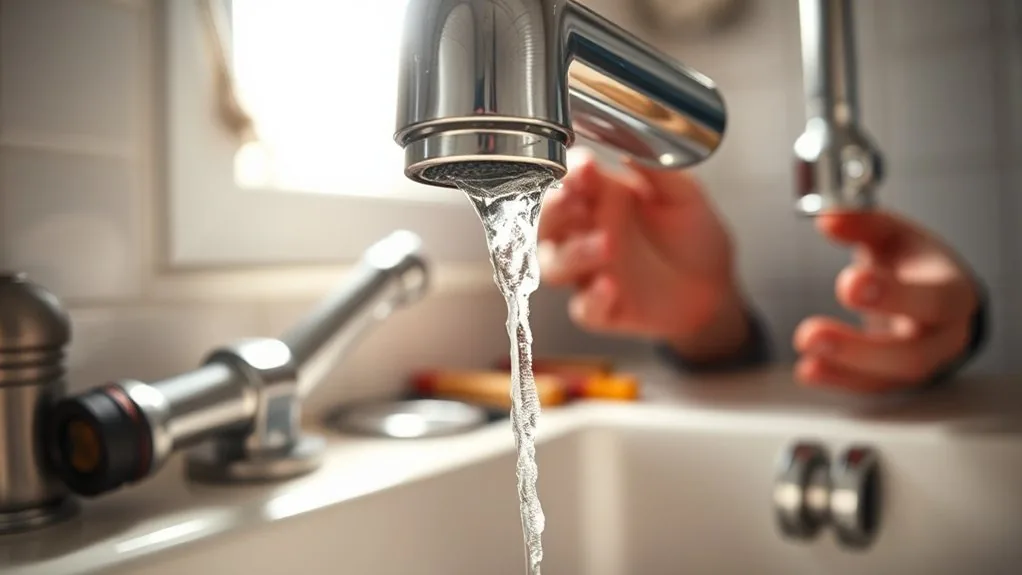
Struggling with low water pressure in Margate? A specialist can assess your mains pressure and identify any pipework or valve issues to improve your water flow efficiently and in line with UK regulations.
Call now for a fast quote or emergency callout.
Water flow improvement is the process of diagnosing and correcting restrictions in your plumbing system so that fixtures receive a consistent, code-compliant flow rate and pressure. You’re not just “boosting pressure”; you’re restoring designed performance across your pipework, valves, and outlets.
In practice, you assess static and dynamic pressures, verify pipe sizing, and check for partial blockages, faulty regulators, or undersized service lines. You also review Water quality, since scale, corrosion, and debris directly affect internal pipe diameter and valve function. Targeted pipe maintenance—such as descaling, flushing, or replacing compromised sections—removes hydraulic bottlenecks. Finally, you calibrate or upgrade control valves, PRVs, and fittings so the system delivers reliable, efficient flow that aligns with Margate and UK water regulations.
If your taps trickle, showers fluctuate, or appliances take too long to fill, it’s a sign you may need water flow improvement rather than just “more pressure.” Persistent low flow at multiple fixtures, noticeable drops when more than one outlet runs, or a sudden decline after building works or plumbing alterations all warrant investigation.
You’ll typically need targeted upgrades when:
You’ll start with an initial home water assessment where a qualified engineer inspects your mains supply, internal pipework, and key outlets. Next, they’ll perform pressure and flow diagnostics using calibrated gauges and flow meters to identify restrictions and non-compliant components, then provide tailored upgrade recommendations that meet UK water regulations. Finally, approved works are installed and commissioned, followed by final testing to verify safe operation and documented improvement in pressure and flow.
Ever wonder what’s actually causing the weak flow at your taps? Your initial home water assessment starts at the stop tap and incoming main, confirming it’s fully open, structurally sound, and accessible for Water safety emergencies. You’ll then walk the property, noting which fixtures are affected: isolated taps, specific bathrooms, or the whole house.
Next, check visible pipework for corrosion, kinks, unsupported spans, and non-compliant materials that could restrict flow or compromise plumbing maintenance. Inspect isolation valves on branch lines to verify they operate smoothly and are correctly oriented.
Finally, compare performance between hot and cold outlets and between upstairs and downstairs fixtures. This structured overview defines where issues originate inside your home, so any later interventions stay targeted, legal, and efficient.
Once the initial walk-through’s done, pressure and flow diagnostics translate your observations into measurable data so the improvement process’s based on facts, not guesswork. Your mains water pressure’s checked at the stopcock and key outlets with a calibrated gauge, confirming whether the supply meets typical UK benchmarks.
Next, dynamic tests measure pressure while multiple fixtures run, revealing bottlenecks, hidden pipe corrosion, or undersized sections. Flow rates (litres per minute) are logged at taps, showers, and outside bibs, then compared against performance standards.
Special attention’s given to pressure drops across valves, filters, and softeners, confirming whether controls are set or sized correctly. By the end, you’ll know exactly where water pressure is being lost within your system.
Although diagnostics identify where pressure’s being lost, tailored upgrade recommendations define exactly how to fix it in a compliant, cost-effective way. You’re given a prioritised plan that aligns with UK Water Regulations and Margate water company requirements.
First, your engineer matches each fault to a specific remedy: upsizing undersized pipework, replacing restrictive fittings, or adding a properly specified booster set. They’ll also consider pressure-balancing valves to stabilise mixed hot–cold supplies and protect appliances.
Next, they’ll specify pipe insulation to minimise heat loss, reduce condensation, and prevent flow restrictions due to temperature-related expansion issues. Recommendations also integrate water conservation: aerated taps, efficient showerheads, and correctly calibrated pressure-reducing valves to avoid waste while maintaining performance. You finish with a clear, staged upgrade roadmap.
When your upgrade plan’s agreed, installation moves in a controlled sequence that keeps your system compliant and disruption minimal. Your engineer will isolate supplies, drain down safely, and replace undersized or corroded lines with approved pipe materials, correctly supported and pressure-rated. Any boosters, accumulators, or pressure-reducing valves are then installed to manufacturer specifications and Water Regulations standards.
Next, they’ll recharge the system methodically, bleed air, and check every joint for leaks. Static and dynamic pressure, flow rates, and temperature stability are measured at key outlets. Controls are adjusted to balance performance with water conservation, ensuring you’re not wasting supply. Finally, all work’s documented, benchmarked, and demonstrated to you, so you understand operation, maintenance, and warranty conditions.
In tackling low water pressure in Margate, it’s essential to distinguish between modern water flow improvement techniques—such as mains upgrades, internal pipe reconfigurations, pressure-boosting sets, and targeted leak repairs—and traditional excavation, which involves large-scale digging to expose and replace buried pipework. You’ll typically prioritise non-invasive diagnostics first, using pressure logging and flow testing to pinpoint restrictions, Pipe corrosion, or undersized sections.
Modern methods let you optimise performance, maintain Water conservation, and stay aligned with UK Water Regulations without unnecessary disruption. Excavation’s still sometimes required, but you should treat it as a last resort.
| Approach | Disruption Level | Typical Use Case |
|---|---|---|
| Flow improvement only | Low | Domestic pressure issues |
| Hybrid (targeted dig) | Medium | Localised underground defects |
| Full traditional excavation | High | Widespread failure or pipe replacement |
Once you weigh flow improvement against full-scale excavation, the advantages of optimising your existing system become clear. You’re targeting the real cause of low pressure—restricted internal diameter, friction losses, and outdated components—without unnecessary disruption. By focusing on Water conservation and robust Pipe maintenance, you also protect long-term performance rather than just applying a short-term fix.
Whether you’re dealing with a semi-detached home in Maidstone or a multi-storey office in Canterbury, low water pressure demands tailored, regulation-compliant solutions for each type of property. In domestic settings, you’ll typically focus on balanced supply to showers, taps, and appliances, verifying pipe sizing, modern pipe materials, and WRAS-approved components. You’ll also consider water conservation by specifying efficient fixtures that maintain performance at lower flow rates.
In commercial premises, you must account for simultaneous demand, fire safety provisions, and commercial plant such as boilers, cooling towers, or catering equipment. Here, correct zoning, boosted cold-water systems, and compliant storage volumes are critical. Across both sectors, you’ll assess existing infrastructure, redesign distribution layouts, and upgrade controls to achieve stable, safe, cost-efficient water flow.
From Folkestone’s coastal terraces to rural farmhouses outside Sevenoaks, our water flow improvement service is engineered to resolve low pressure issues systematically, not just mask them. We begin with a site survey, mapping supply routes, static/dynamic pressures, and existing boosters to current regulations. You’ll receive a clear plan that optimises flow while supporting long‑term water conservation and correct pipe maintenance.
| Stage | What We Do | Your Benefit |
|---|---|---|
| Diagnostic Survey | Pressure, flow, and pipework assessment | Accurate fault identification |
| System Design | Specify pumps, accumulators, control sets | Code-compliant, futureproof solution |
| Implementation | Install/upgrade valves, pipework, boosters | Stable, consistent water flow |
| Performance Testing | Verify flow, pressure, backflow protection | Documented, regulation-ready results |
Across Margate, you get compliant, measurable improvement, not trial-and-error adjustments.
Because low water pressure usually involves more than a single faulty component, you need a contractor that understands the whole system and the regulations that govern it. You get engineers who assess supply pressure, internal pipework, and outlet performance, then design a corrective plan that’s fully compliant with UK Water Regulations and local authority requirements.
We’ll verify existing pipe material, identify undersized or corroded sections, and specify replacements that optimise flow while supporting water conservation and Legionella control standards. Where boosting is required, we correctly size pumps, break tanks, and pressure sets to protect both your plumbing and the mains network. You’ll receive clear documentation, certification, and a long‑term, code‑compliant solution that restores reliable pressure without wasting water.
You’ll naturally want clear answers on how long Water Flow Improvement takes, whether it’s more cost‑effective than excavation, and if your specific Margate postcode is covered. In this section, you’ll see typical timeframes for works, how costs compare to traditional digging, and the exact areas we routinely service. This helps you assess feasibility, compliance, and value before you commit.
Although every property’s plumbing layout and pressure issue is different, most straightforward water flow improvement works in Margate—such as adjusting stopcocks, replacing faulty pressure-reducing valves, or installing a compliant booster pump—can typically be surveyed and completed within a few hours to a single working day, provided access is clear and no buried leaks or supply-side defects are found.
Where investigations reveal more complex restrictions, like undersized or degraded pipe material, you should allow one to three days for design, parts procurement, and installation, especially if internal rerouting is needed for Water Regulations compliance and Water conservation objectives.
If multiple zones, loft tanks, or unvented cylinders are involved, commissioning and testing may extend the process, but disruption’s usually kept to a minimum.
In most domestic cases across Margate, targeted water flow improvement is considerably cheaper and less disruptive than digging up and replacing the incoming supply main, because it focuses on optimising what you already have—stopcocks, internal pipe runs, pressure-reducing valves, and compliant booster sets—rather than funding excavation, reinstatement, and new external pipework. You’re paying for skilled diagnostics and adjustments, not plant hire and reinstating drives or gardens.
| Option | Typical Works | Cost / Disruption Trend |
|---|---|---|
| Flow improvement | Internal pipework, valves, booster sets | Lower cost, minimal digging |
| Partial external replacement | Short new run, limited trenching | Medium cost, localised works |
| Full main replacement | Long trench, new pipe materials throughout | Highest cost, major disruption |
Flow improvement also supports water conservation by stabilising pressures, reducing leakage from stressed joints.
Most homeowners across Margate want to know not just what work’s recommended, but whether a qualified team can actually get to them. You’re covered across most Margate neighborhoods, including urban streets, new-build estates, and rural properties on longer service runs.
Before booking, your postcode’s checked against our coverage map, transport routes, and local water authority boundaries to confirm we can attend and what permissions are required. If you’re on a private main, shared supply, or booster set, that’s flagged so the right equipment’s brought first time.
We also prioritise Water conservation, so any solution we propose—pressure boosting, pipe replacement, or leak remediation—is designed to meet current standards while reducing wastage and stabilising flow long-term in your specific area.
Yes, low water pressure can increase your energy and heating bills over time. This happens because boilers or cylinders may need to run longer to provide hot water, reducing energy efficiency. Check for issues like undersized pipes, partially closed valves, or scaled fittings, and ensure your hot-water system is correctly commissioned to maintain proper flow rates and performance.
Improving water flow usually does not affect your home insurance if the work complies with regulations. Non-compliant upgrades or unapproved parts can void warranties on boilers, cylinders, or pumps and affect future leak claims. Always hire a qualified plumber, keep all invoices and certificates, and inform your insurer of significant plumbing changes to maintain coverage.
Yes, seasonal factors in Margate can worsen low water pressure. Hot, dry weather increases water demand and lowers mains pressure, while cold weather can cause freezing or leaks in exposed pipes. Heavy rain may bring sediment into older pipes, affecting water flow.
Low water pressure reduces the lifespan of water-using appliances by causing them to operate outside their optimal conditions. This can lead to issues such as cavitation, incomplete cycles, overheating, and scale buildup in appliances like combi boilers, showers, dishwashers, and washing machines. To protect these appliances, it is important to check water pressure levels, install pressure-boosting equipment or accumulator tanks if needed, use correctly sized pipework, and maintain filters and strainers according to the manufacturer’s guidelines.
Yes, you can monitor water pressure yourself between professional inspections. Install pressure gauges on the main supply line and after the pressure-reducing valve if possible. Check the pressure readings regularly, especially during peak and off-peak times, and keep a monthly log.
Once you’re ready to restore proper water flow, you can request a tailored quote that identifies the exact work needed—whether that’s boosting mains pressure, replacing undersized pipework, or installing a compliant booster set. You’ll get a clear breakdown of options, costs, and expected performance gains, all aligned with current Water Regulations and local authority requirements.
During the survey, the engineer will assess existing pipe sizes, static and dynamic pressures, storage capacity, and backflow risks. They’ll also review Water conservation opportunities and essential Pipe maintenance, such as removing redundant sections, correcting restrictive fittings, or replacing corroded lines.
Your quote will specify equipment models, duty points, installation method, and any required notifications, so you can approve works with full technical confidence.